Booking choice: The Montjuïc walk with wine, from $26 per person. Check dates Tour details
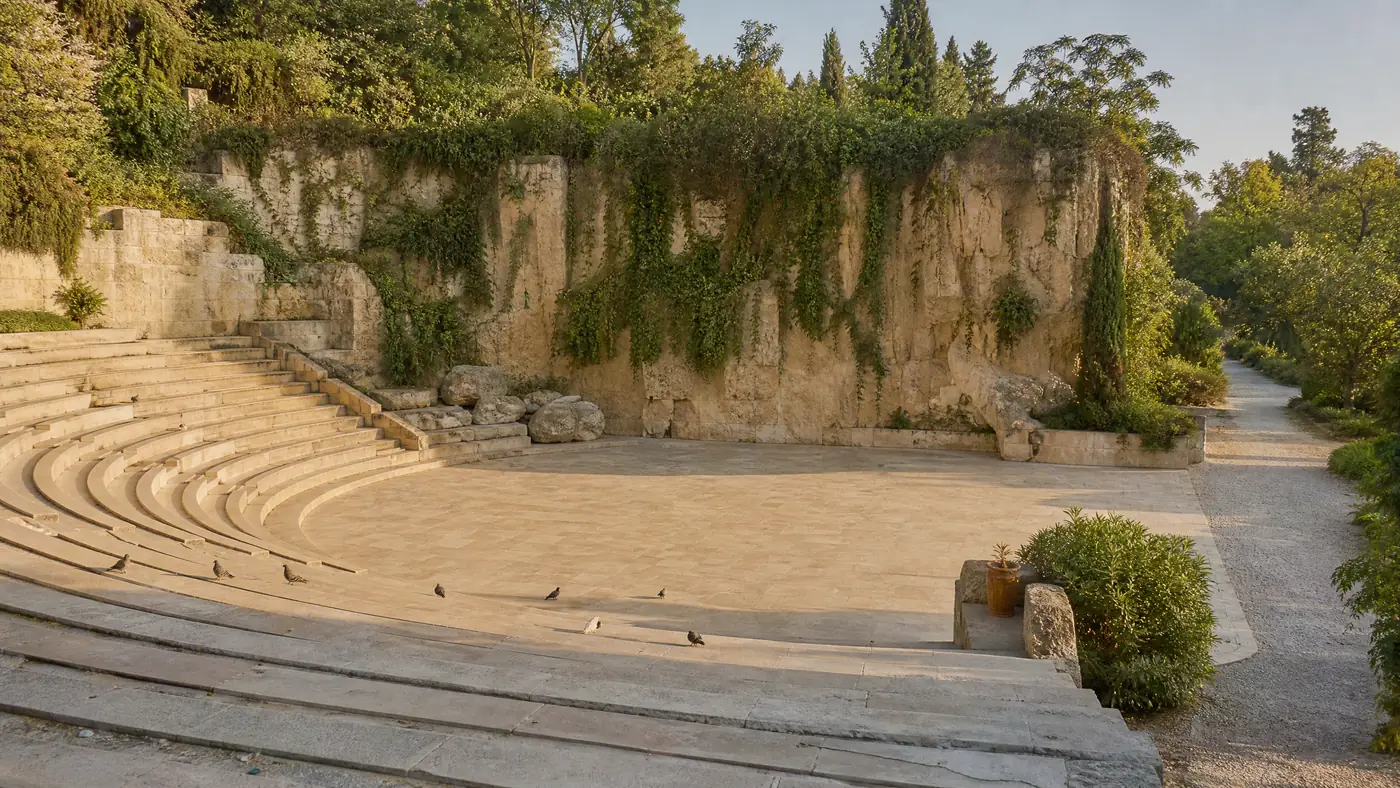
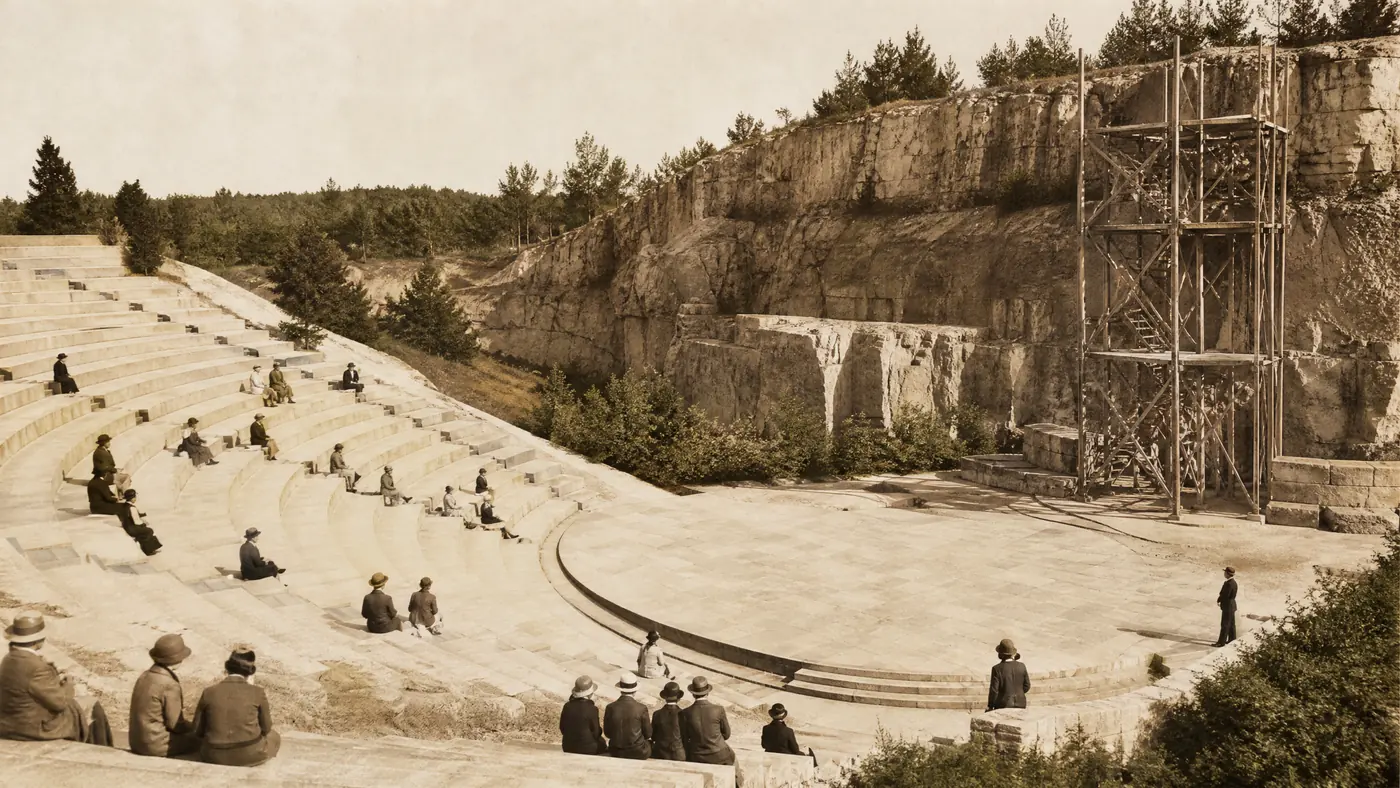
The Teatre Grec stands on the lower slope of Montjuïc, at Passeig de Santa Madrona 38, inside the Jardins del Teatre Grec. Barcelona City Council puts it plainly: "It is not Greek". It is one of the works built for the 1929 International Exposition, set into an old quarry, and today it is the main stage of the Grec Festival every summer.
Below you will find who had the idea, who drew the plans, the rose garden around it, the actors who played there before the war, the quiet decades, the festival of 1976, the stars who followed and the restoration that brought the gardens back. Outside performances the gardens are a free public park, so you can stand on the stone tiers yourself.
The quick answer
The French landscape architect Jean-Claude Nicolas Forestier saw the Machinet quarry in 1921 and called it "a good place for a Greek theatre". Ramon Reventós, with Nicolau Maria Rubió i Tudurí, built it for the 1929 Exposition, inspired by the theatre of Epidaurus. Margarida Xirgu played Electra there in 1932. After years of neglect, actors launched the first Grec Festival in 1976, and the City Council has run it since 1979.
Who first saw a theatre in the Montjuïc quarry?
Jean-Claude Nicolas Forestier, the French landscape architect. Walking past the old Machinet quarry in 1921, he said: "A good place for a Greek theatre."
The line comes from the Montjuïc Cable Car's own page on the theatre, which credits the whole project to that stroll. Forestier (1861 to 1930) was no casual visitor. Wikipedia describes him as a former conservator of the promenades of Paris, the man behind María Luisa Park in Seville (1914) and, in Barcelona, the gardens of Montjuïc: Laribal, the Miramar gardens and the gardens of the Greek theatre. He worked closely with the young Catalan architect Nicolau Maria Rubió i Tudurí.
The quarry already had a long past. Wikipedia notes that in Iberian and Roman times Montjuïc was the main quarry of Barcelona, which changed the shape of the mountain. The City Council's gardens page says the Machinet quarry had been worked by digging out the earth in front of a huge wall of extremely hard stone, right where the mountain starts to rise. That wall is the backdrop you see behind the stage today.
Forestier saw what others had missed: a slope already cut into a bowl, facing a sheer rock face. An ancient Greek builder would have looked for exactly that.
Why was the Teatre Grec built for the 1929 Exposition?
It was part of the landscaping of Montjuïc for the Barcelona International Exposition, the world's fair that ran from 20 May 1929 to 15 January 1930 and turned the hill into palaces and gardens.
The fair was a long time coming. Wikipedia traces the idea to 1905 and the architect Josep Puig i Cadafalch. Montjuïc was chosen in 1913, the opening planned for 1917 slipped because of the First World War, and development work on the hill began that same year. The finished site covered 118 hectares. King Alfonso XIII opened it on 19 May 1929, the day before the public opening, in front of some 200,000 people.
The landscaping went to Forestier, assisted by Rubió i Tudurí. Their design was Mediterranean with classical touches, all pergolas and terraces. The style of the age in Catalonia was Noucentisme, a return to classical order, and Catalan Wikipedia files the Teatre Grec under it. A Greek theatre fitted the mood perfectly.
Plenty of the fair is still standing, and much of it is a short walk from the theatre:
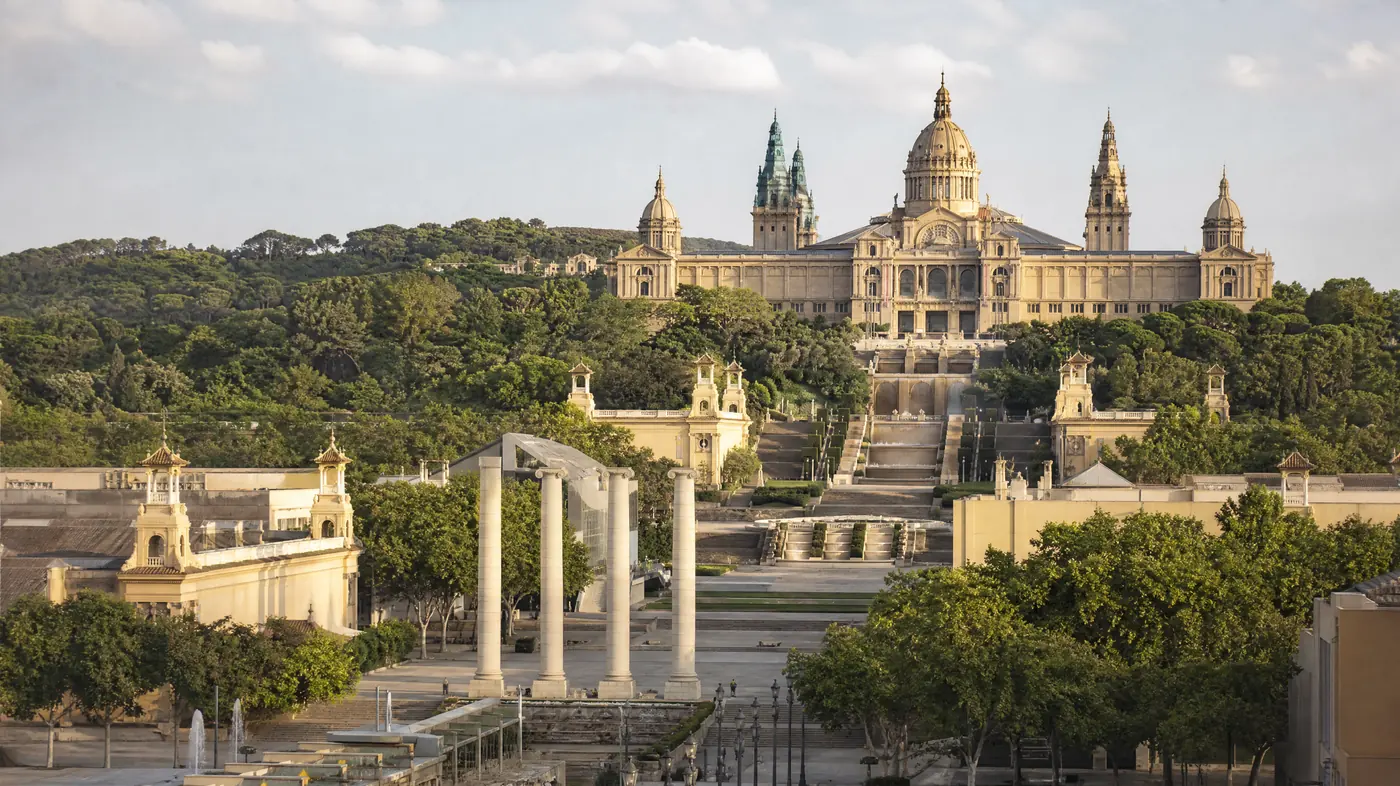
- The Palau Nacional: the main building, now the MNAC.
- The Magic Fountain: by Carles Buïgas, first lit on 19 May 1929.
- The Poble Espanyol: a Spanish village of reproduced buildings, also by Ramon Reventós.
- The Olympic stadium: completed in 1929, rebuilt for the 1992 Games.
- The Montjuïc Funicular: built for the fair, opened in 1928.
The guided Montjuïc walk with a glass of wine walks down through the hillside to the Teatre Grec and ends by the Magic Fountain, two works of the 1929 fair in one morning.
Check dates for the Montjuïc walk with wineWho designed the Teatre Grec, and is it a copy of Epidaurus?
The architect Ramon Reventós, with Nicolau Maria Rubió i Tudurí. They took the ancient theatre of Epidaurus as the model, but used the quarry wall as the stage backdrop, so the result is very much its own.
Most sources name Reventós as the architect; the City Council and the cable car page credit him and Rubió i Tudurí together. Their inspiration was the theatre of Epidaurus in the Peloponnese, known for its tiers built into a hillside. On Montjuïc they did the same thing with the slope of the mountain and the remains of the quarry, and the City Council notes the aim of an open-air stage with optimal acoustics.
| The Teatre Grec | Figure | Source |
|---|---|---|
| Built | 1929, for the International Exposition | Catalan Wikipedia; City Council |
| Model | The theatre of Epidaurus, Peloponnese | City Council; cable car page |
| Site | The former Machinet quarry; the rock face is the stage wall | City Council |
| Stage surface | 460 m2 | Catalan Wikipedia |
| Shape | Semicircular, about 70 m across | Wikipedia, 1929 Exposition |
| Capacity | 1,900 spectators | Catalan Wikipedia; cable car page |
| Address | Passeig de Santa Madrona 38, Poble-sec | City Council |
Reventós left a second mark on the same fair. Wikipedia says he designed the Poble Espanyol with Francesc Folguera, a walled village of reproduced Spanish buildings on the western side of the hill. One architect, two very different stages for the crowds of 1929.
What was the Amargós Rose Garden around the theatre?
The original name of the Jardins del Teatre Grec. Forestier designed it as a rose garden that climbs 44 metres from Passeig de Santa Madrona to the Plaça del Solstici, where the Fundació Joan Miró stands today.
The City Council's history is precise. The Roserar Amargós was part of a garden complex built for the 1929 Exposition and took its name from Josep Amargós, the first architect to landscape Montjuïc. Its job was to link the large Plaça del Solstici, then part of the Laribal gardens, with the lower Passeig de Santa Madrona and the Exposition buildings below, across a difference of 44 metres in level.
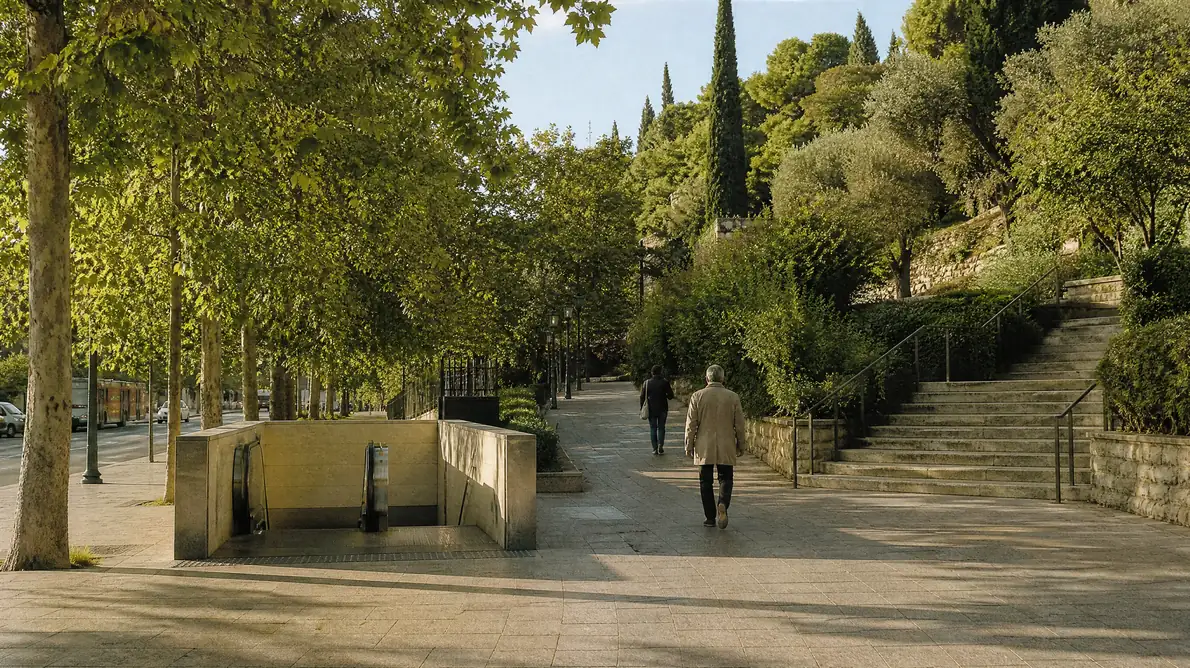
That climb shapes the visit even now. From Passeig de Santa Madrona you meet a large stone stairway rising on both sides of a wall: the main entrance. Above it come the pergola, the old pavilion and sloping clipped hedges with tall trees behind. Geometric flowerbeds, ponds, creepers, orange trees and a rectangular terrace of flowers complete the picture the City Council paints.
The pavilion has its own story. At the top of the gardens stands the former Music Pavilion of the 1929 Exposition. It is now the bar-restaurant, open during the theatre season.
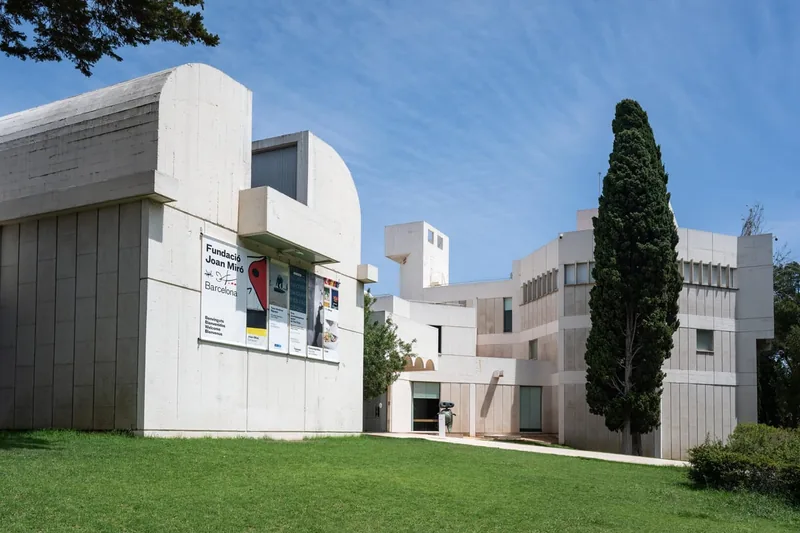
At the top of the rose terraces, on the old Plaça del Solstici, the Fundació Joan Miró: the most complete collection of Miró's art, in Josep Lluís Sert's building. A dated ticket skips the queue.
Explore the Fundació Joan Miró ticket Tour detailsWhat was performed at the Teatre Grec before the festival?
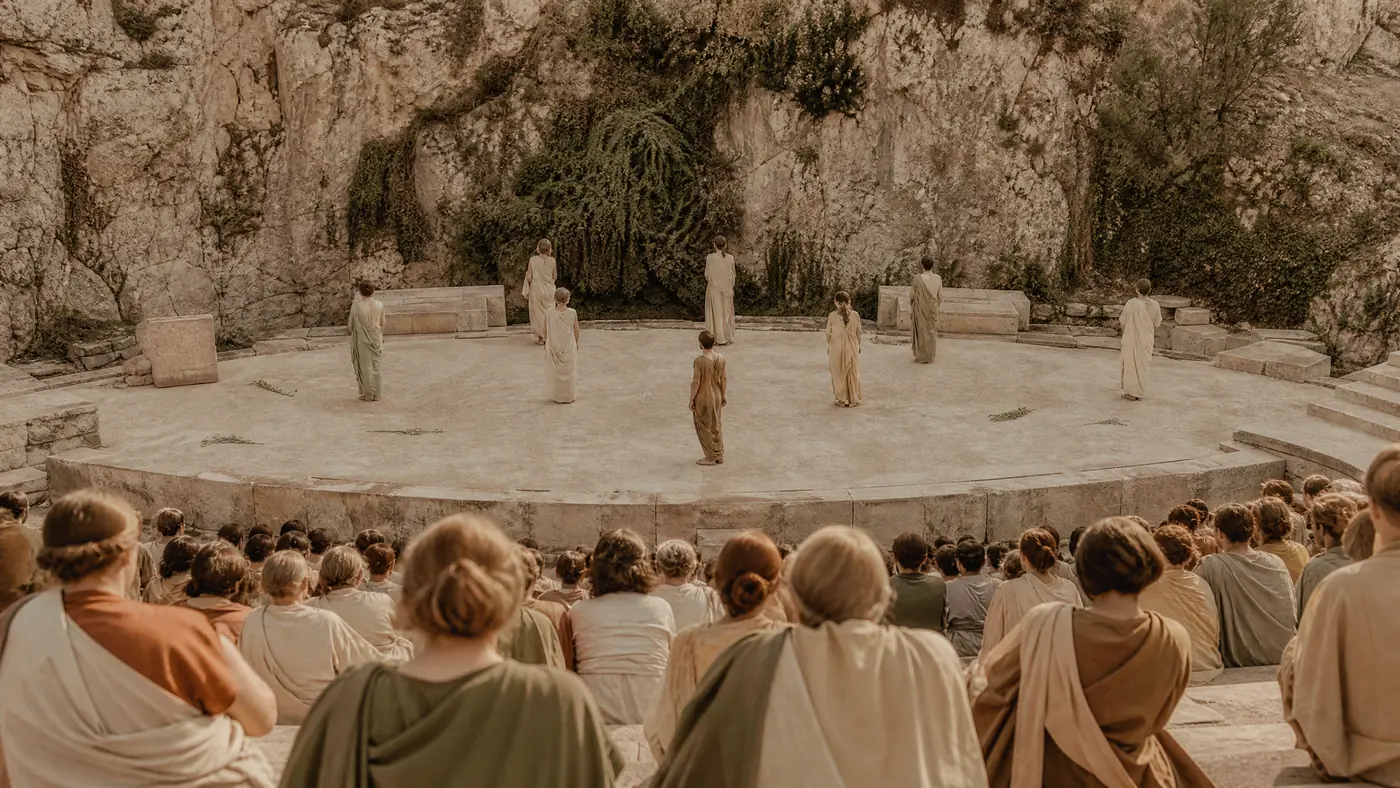
Classical drama, from the start. Margarida Xirgu played Sophocles' Electra there in 1932. After the Civil War the theatre stood abandoned until a reopening in 1952 with Oedipus Rex.
Catalan Wikipedia keeps a long list of productions, drawn from the City Council's own history of the theatre. The great tragic actress Margarida Xirgu set the tone, and the stage went through good seasons and long silences after her.
| Year | On the stage |
|---|---|
| 1932 | Electra by Sophocles, with Margarida Xirgu |
| 1933 | Medea by Seneca, in a version by Miguel de Unamuno, with Xirgu and Enric Borràs |
| After 1939 | The theatre is left abandoned after the Civil War |
| 1952 | Reopening in summer with Oedipus Rex, on the initiative of Mercedes de la Aldea |
| 1955 to 1956 | Seasons of Greek drama directed by Dolly Latz: Sophocles, Euripides, Aeschylus |
| 1957 | Julius Caesar in Catalan, translated by Josep Maria de Sagarra, directed by Esteve Polls |
| 1960 | Núria Espert plays Hamlet, taking the male title role |
| 1969 to 1972 | The theatre is closed |
| 1973 to 1975 | Run privately by Maria Lluïsa Oliveda, with dance, music and theatre |
The 1957 Julius Caesar is the one Catalan theatre historians point to: Catalan Wikipedia marks it as the first performance in Catalan on that stage. Most of the post-war repertoire was classical theatre in Spanish. Espert's Hamlet in 1960 followed the example of Sarah Bernhardt, who had played the prince in her day.
How did the Grec Festival begin in 1976?
The Assemblea d'Actors i Directors, an assembly of actors and directors, organised a self-managed summer season at the semi-abandoned theatre in 1976. It was a public success, and the City Council took the festival over in 1979.
Spain was moving back to democracy, and Barcelona's independent theatre scene wanted a stage of its own. Wikipedia says the first festival both rescued the theatre and drew big audiences. Catalan Wikipedia lists Divinas palabras by Valle-Inclán, directed by Víctor García with Núria Espert, among the 1976 shows, and the Bread and Puppet Theatre of Peter Schumann in 1977.
The assembly ran two editions. There was no festival in 1978. After the first democratic municipal elections in 1979 the City Council took charge, and that year's festival opened with Salvador Espriu's Antígona. International productions arrived from 1980, and the festival slowly spread to venues all over the city.
| Years | Who ran the festival |
|---|---|
| 1976 to 1977 | Assemblea d'Actors i Directors |
| 1978 | Festival not held |
| 1979 | Rafael Pradas and Joan-Anton Benach (City Council) |
| 1980 to 1983 | Biel Moll |
| 1988 to 1995 | Elena Posa |
| 2000 to 2006 | Borja Sitjà |
| 2017 to 2024 | Francesc Casadesús |
| From 2024 | Leticia Martín Ruiz |
The name stuck to the stage. The festival is called Grec after its main venue, and the City Council says the theatre "sleeps in winter and awakens each summer" to open it. Tickets for the shows come from the festival itself, or from the partner theatres for Grec Ciutat events; our Grec Festival tickets guide explains how.
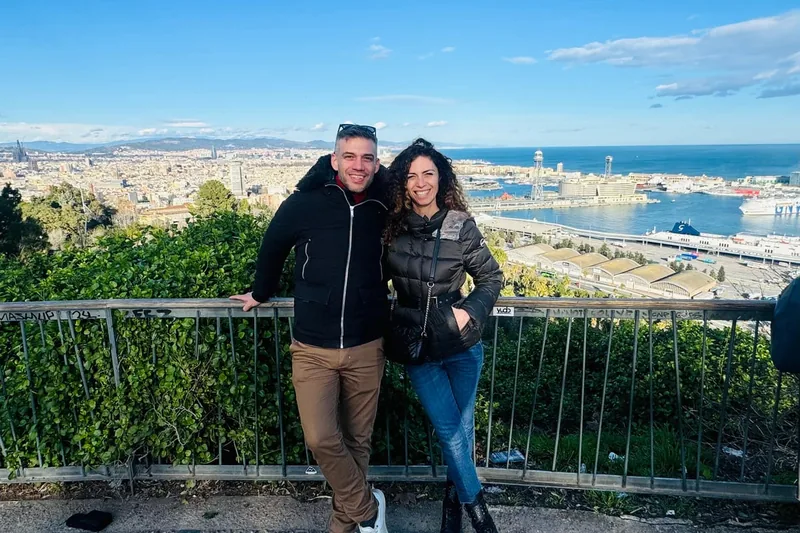
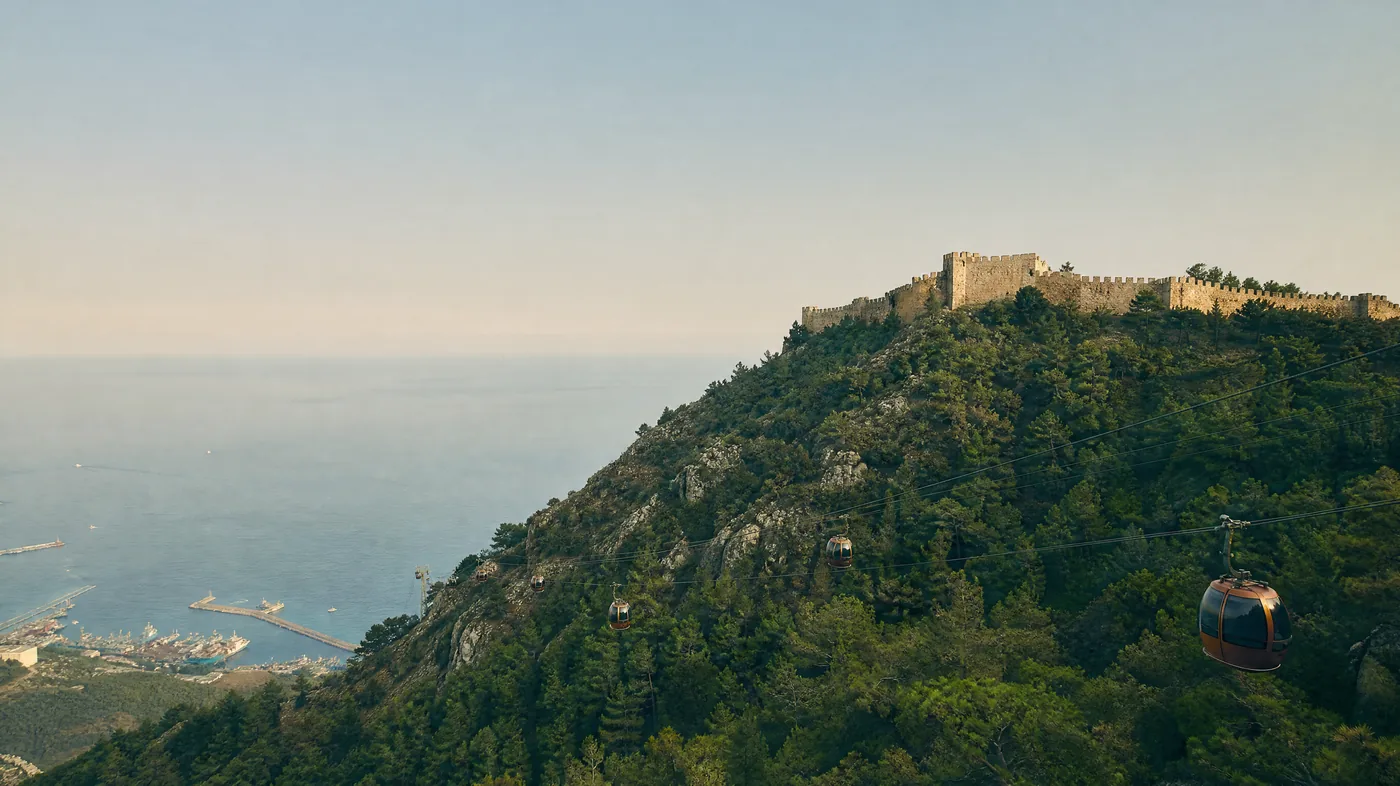
A three-hour walk across Montjuïc with a local guide: the Joan Brossa gardens, the Mirador de l'Alcalde with a glass of wine, the castle from outside, then down to the Teatre Grec and on to the Magic Fountain.
Explore the Montjuïc walk with wine Tour detailsWhich famous artists have appeared at the Grec Festival?
A long list: Dario Fo, Peter Brook, the Martha Graham Dance Company, Sasha Waltz, Robert Lepage, Paco de Lucía, Miles Davis, Celia Cruz, Chuck Berry and Elvis Costello among them.
Wikipedia's list of festival guests mixes theatre, dance and music. Remember that the festival uses many venues today, so not every name played under the stars on Montjuïc.
- Theatre: Dario Fo, Lindsay Kemp, Peter Brook, Jan Fabre, Robert Lepage, Michel Piccoli, Àlex Rigola, Calixto Bieito.
- Dance: the Martha Graham Dance Company, Sasha Waltz, Nacho Duato, Cristina Hoyos, the Cloud Gate Dance Theater of Taiwan.
- Music: Paco de Lucía, Miles Davis, Manhattan Transfer, Joe Cocker, Celia Cruz, Chuck Berry, Elvis Costello.
The festival turned fifty in 2026. The edition ran from 29 June to 31 July with about 100 shows in 58 venues, and opened with The Threepenny Opera, directed by Marta Pazos and co-produced with the Teatre Lliure. The dance company Mal Pelo made its debut at the Teatre Grec. On the night of 8 July the amphitheatre hosted the anniversary itself: a conversation with Mario Gas, a witness of the early years, four short films by Sílvia Munt, Jaume Claret, Marc Salicrú and Núria Giménez Lorang, and a party in the gardens. The festival is now redesigning its digital archive of photographs, programmes and videos.
The 2027 dates are not out yet. The festival usually runs from late June to the end of July, and the City Council's festival pages publish the programme in spring. Our Grec Festival season guide follows it.
How was the Teatre Grec restored, and can you visit it today?
The gardens were restored by Patrizia Falcone around 2008 to 2009, back to Forestier's original layout. Outside performances the theatre and gardens are a free public park, open daily.
The City Council dates the restoration to 2008, the cable car page to 2009; both credit Patrizia Falcone, who gave the gardens back their early 20th-century look. After 1979, the City Council adds, the site regained its artistic and landscape splendour as the home of the summer festival.
| Season | Gardens open |
|---|---|
| 1 April to 31 October | Daily, 08:00 to 21:00 |
| 1 November to 31 March | Daily, 08:00 to 19:00 |
Closing times are approximate and follow the daylight. No pets are allowed, and access can be limited during rehearsals and shows. There is a public toilet and the Guingueta bar La Greca. On 23 November 2026 you are in the quiet season: the stage is asleep, the gardens close at dusk around 19:00, and you may well have the tiers to yourself.
Two tours on this site pass the theatre. The Montjuïc walk with wine stops at the Teatre Grec on the way down the hill, and the Montjuïc and sea views tour includes it with the MNAC and the Olympic Ring. Neither is a festival ticket. For visiting on your own, read our visitor guide to the Teatre Grec and how to get there.
Walk the stone tiers with a local guide who knows the story: the Montjuïc walk with wine reaches the Teatre Grec after the castle and the Mirador de l'Alcalde.
Check dates for the Montjuïc walk with wineFrequently asked questions
When was the Teatre Grec built?
In 1929, for the Barcelona International Exposition. The French landscape architect Forestier had suggested the quarry site in 1921.
Who designed the Teatre Grec in Barcelona?
The architect Ramon Reventós, with Nicolau Maria Rubió i Tudurí. They were inspired by the ancient theatre of Epidaurus and used the quarry wall as the stage backdrop.
Is the Teatre Grec a real ancient Greek theatre?
No. It only looks ancient. It was built in 1929 in the style of Greek theatres, inside the former Machinet quarry on Montjuïc.
When did the Grec Festival start?
In 1976, when an assembly of actors and directors organised a summer season at the semi-abandoned theatre. The City Council has run the festival since 1979.
Ready to book
Choose your tour
Free cancellation up to 24 hours before on every option. Prices are from-prices in USD and move with the season.
Montjuïc Walking Tour with a Glass of Wine
- Local guide
- Glass of wine at a viewpoint
- The Teatre Grec on the route
Montjuïc, Cable Car and Sea Views Tour
Mountain, sky and sea in one morning
Fundació Joan Miró Entry Ticket
Miró's art a short climb from the theatre